SPECIAL INTRODUCTORY BOOK RELEASE FOR INSURANCE AND FINANCIAL PROFESSIONALS
REAL-WORLD CASE STUDY:
One Client Relationship. Fifteen Years. Three Generations.
How One Estate-Planning Conversation Became a 15-Year, Three-Generation Client Relationship…
And the Simple Family Tree First Interview Financial Professionals Can Use to Uncover More Opportunities Inside the Clients They Already Have — Without Chasing Cold Leads, Buying More Appointments, Begging for Referrals, or Opening Every Meeting With a Product Pitch.
For Financial Professionals Who Want A More Profitable Practice
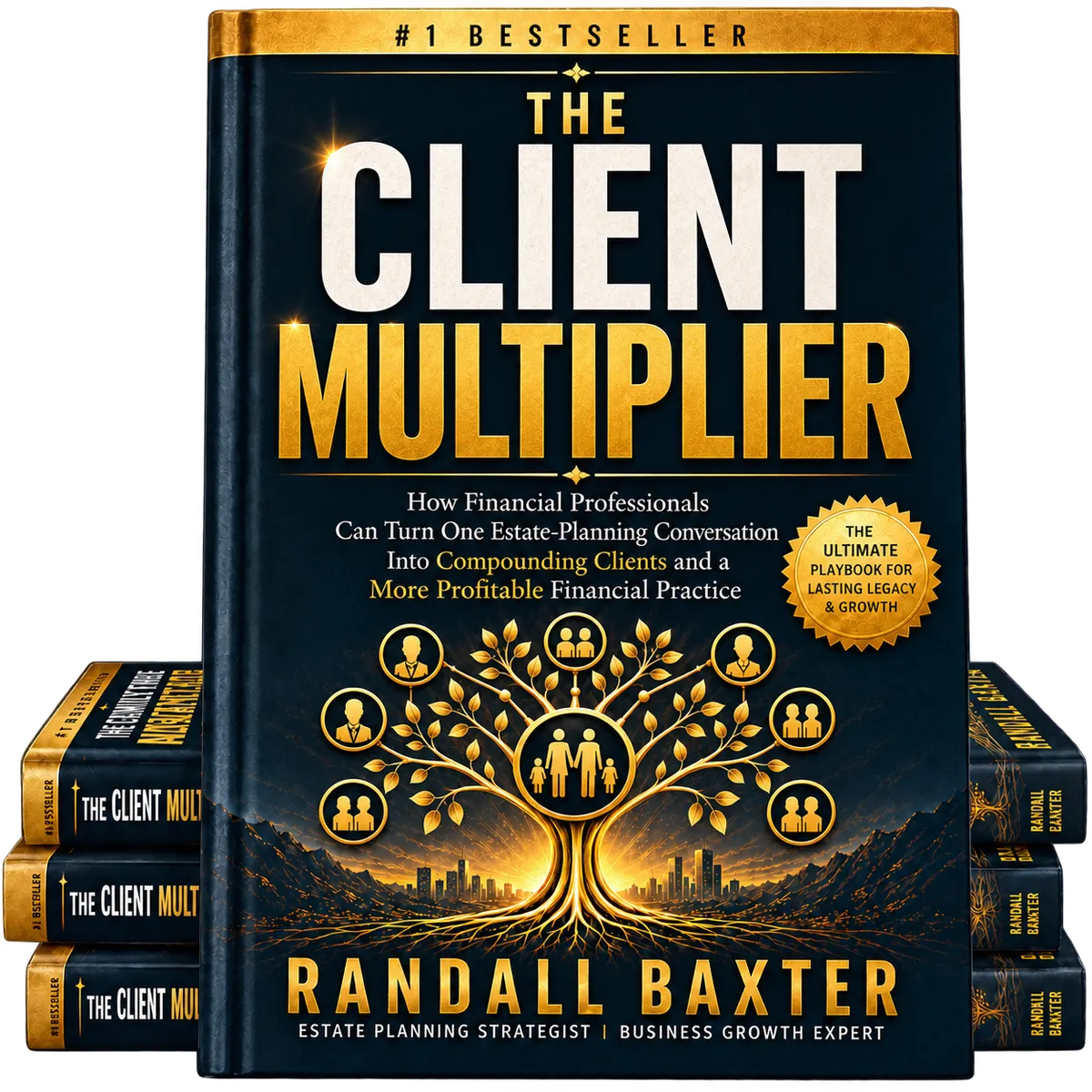
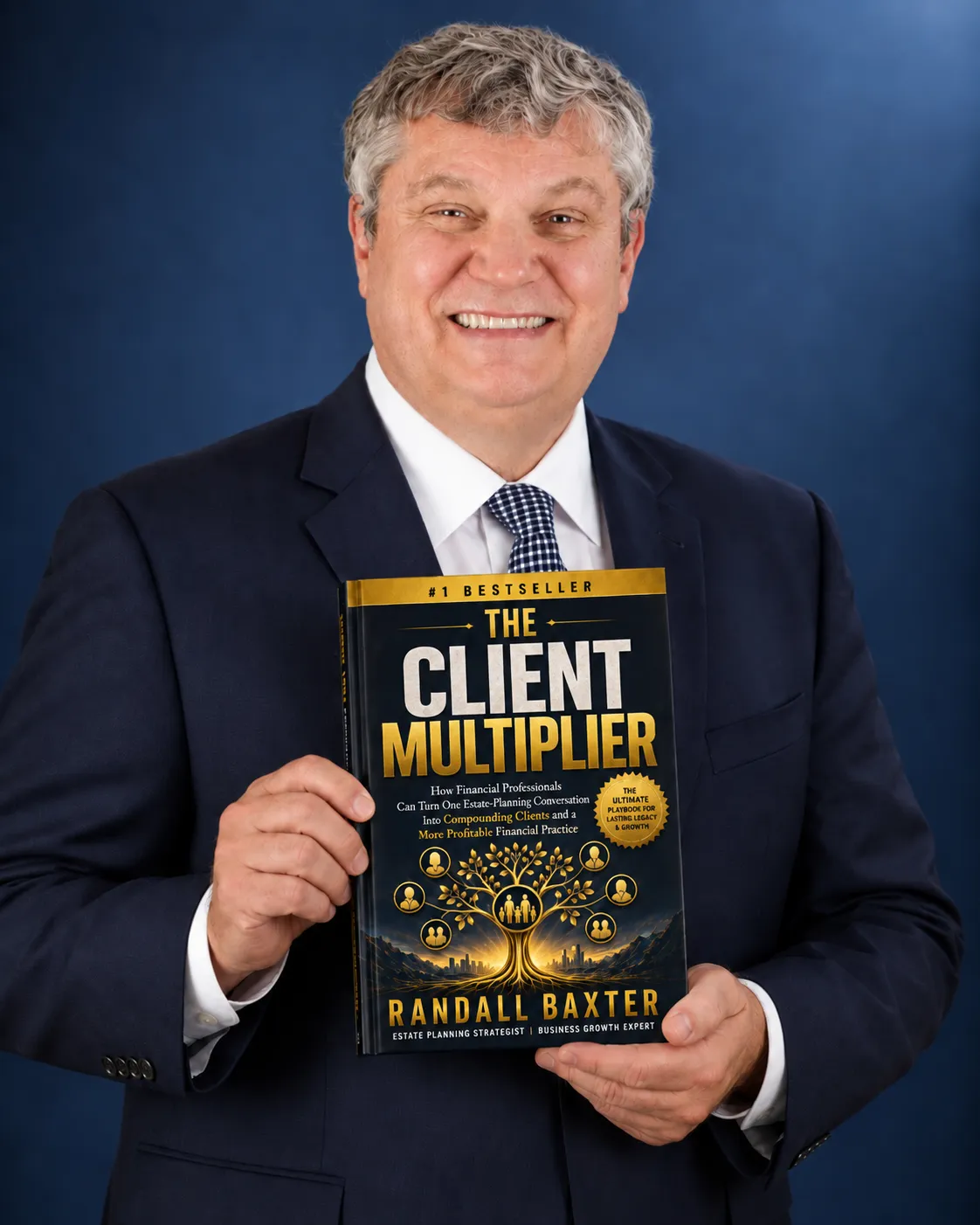
Get Randall “Randy” Baxter’s New Book:
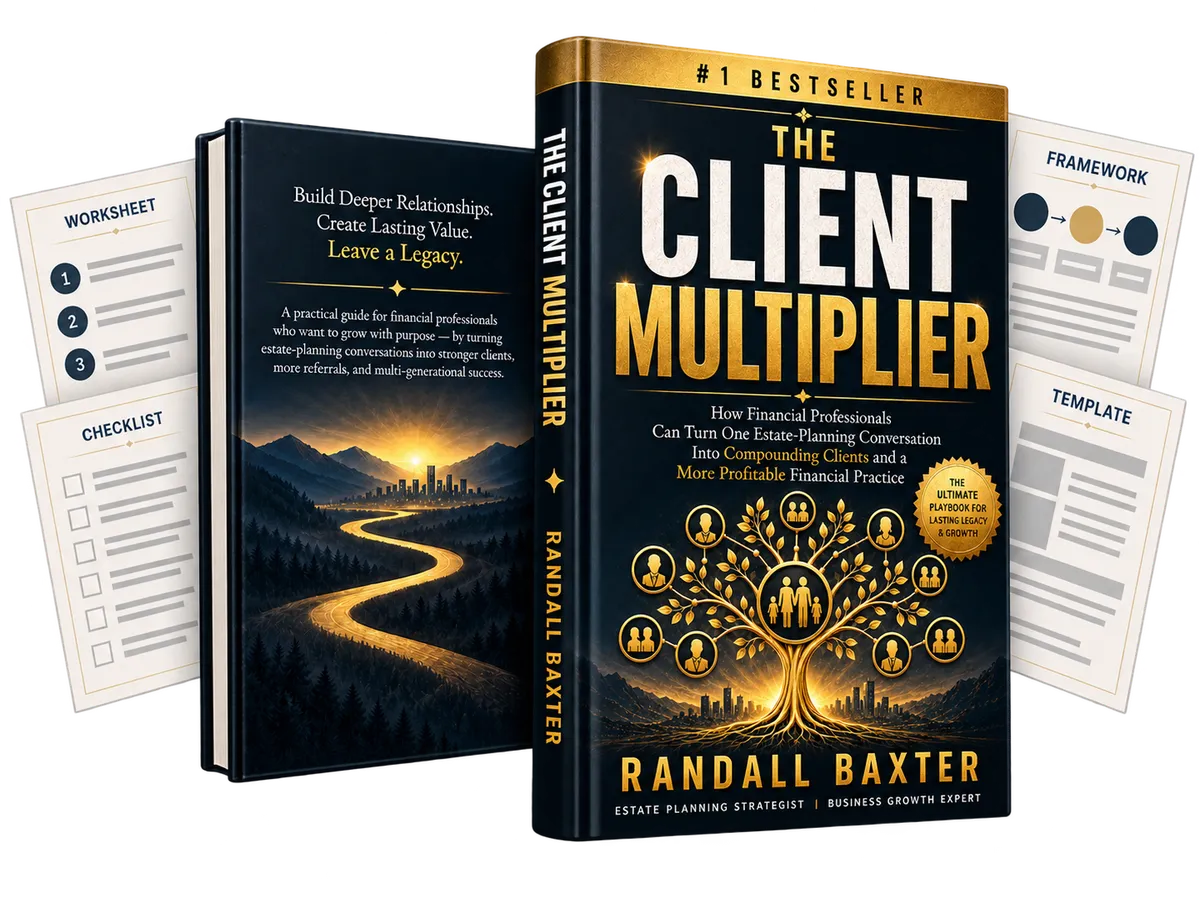
THE client multiplier
How Financial Professionals Can Turn One Estate-Planning Conversation Into Multi-Generational Clients and a More Profitable Financial Practice
Inside this practical new book, Randy reveals the client-centered first-interview process he developed to help financial professionals:
Reopen relationships with existing clients
Uncover overlooked family and planning needs
Create more purposeful annual reviews
Develop natural introductions to the next generation
Move from product salesperson to the professional families call first
It Begins With One Circle, One Client, and Better Questions.
1
INITIAL CONVERSATION
15
YEARS OF CONTINUITY
3
GENERATIONS SERVED

Randall "Randy" Baxter
Former Educator
New York Life Agent and Training Supervisor
Independent Financial-Services Practitioner
Creator of the Family Tree Asset Positioning First Interview
“I Have a Canceled Check for Every Level of Knowledge I Achieved.”
VERIFIED ENDORSEMENT #1
NAME, CREDENTIAL, ORGANIZATION
“Possibly the Most Important Client Conversation You Are Not Having…”
From the desk of Randall Baxter
Knoxville, Tennessee
Dear Financial Professional,
Let me ask you a direct—and possibly uncomfortable—question.
How many of your existing clients would call you first if something important changed in their family tomorrow?
If a spouse passed away…
If a client received an inheritance…
If an aging parent suddenly needed care…
If a son or daughter divorced…
If a business was sold…
If retirement began earlier than expected…
If a beneficiary needed to be changed…
If a health diagnosis affected the family’s financial plans…
Would your client immediately pick up the phone and call you?
Or would the conversation go to an attorney, CPA, banker, competing advisor, online estate-planning service, or someone else who appears to understand more of the family’s complete situation?
That question matters because you may have spent years earning the client’s trust.
You may have helped establish an insurance policy.
You may have assisted with an annuity, retirement account, investment strategy, or other financial decision. You may even conduct an occasional annual review.
But owning a product does not necessarily mean the client sees you as the professional responsible for helping the family think through major changes.
And that creates a dangerous gap.
You believe you have a client.
The client may believe they simply have a product with you.
Those are not the same relationship.
When a meaningful life event occurs, the professional who understands the family is usually in a stronger position than the professional who understands only the account.
That is why so many capable financial professionals remain trapped on the prospecting treadmill.
They keep looking for the next stranger.
They purchase more leads.
They make more calls.
They hold more seminars.
They chase online appointments.
They ask for referrals that feel forced or premature.
They spend money trying to create new trust while overlooking the trust they have already spent years building.
You May Not Have a Lead Problem.
You May Have a First-Interview Problem.
Most first interviews are organized around the professional’s product.
The conversation begins with insurance.
Or annuities.
Or assets under management.
Or retirement income.
Or another specific solution.
But the client does not wake up thinking about your product category.
The client thinks about:
A spouse
Children
Grandchildren
Aging parents
Health
Retirement
Property
Taxes
Inheritance
Responsibility
Control
Protection
What will happen if something goes wrong
What will happen to the people they love
When the conversation begins with the product, the client sees the product.
When the conversation begins with the family, the client begins to see you differently.
That realization changed the way I approached financial services.
And it eventually led me to one of the longest and most meaningful client relationships of my career.
You Have Already Paid to Earn These Relationships.
But Are You Receiving the Full Value of the Trust You Built?
Think about what it took to acquire your current clients. The calls. The appointments. The follow-up. The objections. The applications. The underwriting. The paperwork. The service work. The renewals. The years of being available.
You invested time, energy, expertise, and money to create those relationships. Yet many professionals allow the relationship to go quiet as soon as the initial transaction is complete. A policy was issued. An account was opened. A transfer was completed. A commission was paid.
Then everyone moved on. Years may pass before another meaningful conversation occurs. Meanwhile, the client’s life continues to change. Children marry. Grandchildren are born. Parents become dependent. Health declines. A spouse dies. An inheritance arrives. A business is sold. Property changes hands. Retirement accounts grow. Beneficiaries become outdated. An existing estate plan no longer reflects the family.
The professional who knows about these changes has an opportunity to help. The professional who does not know about them may never learn what happened.
And That Is Where Opportunities Quietly Disappear.
Not because the client dislikes you. Not because you failed to work hard. Not because another advisor necessarily offered a better product. The opportunity may disappear simply because someone else asked better questions first.
Someone else understood the family. Someone else helped organize the conversation. Someone else became useful at the moment when the family needed clarity.
And once that person becomes the family’s coordinating professional, it can be difficult to regain that position.
That Is Why the First Interview Matters So Much.
It does more than collect financial facts. It establishes the lens through which the client sees your role. Are you there to sell a product? Or are you there to understand the family, identify concerns, and coordinate the next appropriate conversation? That difference can shape the relationship for years.
“I Have a Canceled Check for Every Level of Knowledge I Achieved.”
I did not begin my career with a perfect process. I began as a teacher.
I earned a degree in education and taught subjects including business, salesmanship, banking, economics, psychology, sociology, and business mathematics.
That background eventually became far more valuable than I understood at the time.
Teaching taught me that complexity does not impress people.
Clarity helps them act.
The best process is not always the process with the most complicated terminology — it's the one people can understand, remember, and use.
I later entered financial services with New York Life.
I became an agent and then a training supervisor responsible for helping newer agents grow.
I learned products.
I learned prospecting.
I learned salesmanship.
I learned how difficult this business can be when your livelihood depends on continually finding new people who are willing to speak with you.
I also learned what happens when the product becomes more important than the client.
At different points in my career, I represented companies with particular products and particular ways they wanted those products sold.
But one of my mentors asked me a question that changed the direction of my practice: why not begin with the client's needs, and then find the appropriate solution?
That sounds obvious today.
But it created an important shift. Instead of searching for people who fit a product, I began thinking about how to understand the person first.
That shift eventually brought me into estate-planning and income-planning conversations, and those conversations taught me something else.
The Greatest Long-Term Value Was Rarely Limited to the First Transaction.
The initial conversation could reveal a need. But understanding the family could reveal a relationship — one that might continue through annual reviews, beneficiary changes, retirement, inheritance, health events, asset transitions, new family members, and introductions to children and grandchildren and additional planning needs.
I did not learn this from theory alone. I learned it by making mistakes, paying for mentorship, observing clients, and refining the process over years of practice.
That is why I tell people:
“I Have a Canceled Check for Every Level of Knowledge I Achieved.”
I wrote The Family Tree Advantage so you do not have to make every one of those costly mistakes yourself.
The Client Who Called Me a “Whippersnapper”
Several years ago, I was introduced to an 86-year-old gentleman.
He already had a revocable living trust.
He was not sitting around waiting for a financial professional to sell him a new estate plan. And he did not immediately see me as a seasoned authority.
In fact, he thought I was a “whippersnapper.”
Young.
Possibly overconfident. Someone who still needed to prove his value.
I could have tried to overcome that resistance by presenting more credentials.
I could have launched into a product presentation.
I could have told him everything I knew. I did not.
Instead, I asked permission to review part of the situation he already had.
I wanted to understand what was in place. I wanted to look at the beneficiary structure.
I wanted to understand the family and the responsibilities connected to the plan.
That conversation revealed areas that deserved attention.
But something more important also happened.
I began to understand the family surrounding the client.
His wife.
His daughter.
His granddaughter.
The successor trustee.
The people he trusted.
The people he wanted to protect.
The people who would eventually become responsible for important decisions.
The first conversation led to an opportunity to help the original client.
But the relationship did not end there.
Over time, the client and his spouse passed away.
The daughter inherited assets and faced retirement decisions of her own.
The granddaughter eventually inherited and experienced significant family changes.
A successor trustee entered the picture.
Health changed.
Relationships changed.
Assets changed.
Because I understood the family—and because I remained useful as those changes occurred—I continued to be included in important conversations.
Fifteen Years After the Original Client Passed Away, the Relationship Was Still Creating Opportunities to Serve.
Not merely through the original client.
Through the family.
Through the people connected to the planning.
Through the people who came to know me because someone they trusted had already trusted me.
That is what one properly conducted estate-planning conversation can make possible.
Not in every situation.
Not automatically.
Not without skill, service, follow-up, and appropriate professional involvement.
But the case demonstrates a principle every experienced financial professional should understand:
One Client Is Rarely Just One Person.
Every client is part of a family system.
There may be a spouse.
Children.
Grandchildren.
Parents.
Siblings.
Successor trustees.
Executors.
Guardians.
Beneficiaries.
Business partners.
Trusted friends.
Attorneys.
CPAs.
Other professionals.
When you understand only the product, you see the transaction.
When you understand the family, you begin to see the relationship.
The underlying client story, including the original 86-year-old client, daughter, granddaughter, successor relationships, and approximately 15-year continuation, appears in Randy’s manuscript.
The Process Begins With a Circle the Size of a Quarter.
You do not need a complicated presentation to begin. You need a blank sheet of paper. A pen. And a willingness to listen.
Start by drawing a circle approximately the size of a quarter.
Place the client’s name inside it.
Then ask whether the client is married.
If so, add another circle and connect the two.
Add the children.
Add the grandchildren.
Ask where they live.
Ask who is married.
Ask who has children.
Ask who the client trusts.
Ask who may someday be responsible for financial or healthcare decisions.
Ask who would step in if the client could not.
Ask who may inherit.
Ask who may need protection.
Ask which relationships are strong.
Ask where tension or uncertainty may exist. And then listen.
Let the Client Talk About the People in the Family.
That simple visual changes the conversation.
The client is no longer staring at a product illustration.
They are looking at the people they care about.
The discussion becomes personal without becoming pushy.
It becomes structured without feeling scripted.
It becomes relevant without beginning with a product recommendation.
As the Family Tree takes shape, you can begin exploring three categories of change.

As the Family Tree takes shape, explore three categories of change
RELATIONSHIP CHANGES
Marriage, divorce, death, remarriage
A new child or grandchild.
A dependent family member.
A new trustee or change in beneficiary.
A child who is not prepared to manage money.
A family member who should—or should not—receive assets directly.
HEALTH CHANGES
A new diagnosis or chronic condition.
Incapacity or long-term-care concerns.
An aging parent.
A spouse who may require support.
A child or grandchild with special needs.
A health issue that affects retirement, insurance, liquidity, or investment decisions.
ASSET CHANGES
Retirement or Inheritance.
The sale of property or a business.
A maturing accountor change in ownership.
A large distribution or beneficiary problem.
An underfunded trust.
New liquidity needs or change in risk tolerance.
A significant shift in income or assets.
Relationships Change. Health Changes. Assets Change.
When one of those areas changes, the family’s planning may need to change with it.
The Family Tree First Interview helps you recognize those moments.
It does not require you to force a product into the conversation.
It helps you determine whether another conversation is appropriate.
Whether documents should be reviewed.
Whether beneficiaries should be examined.
Whether income needs should be calculated.
Whether insurance, annuity, retirement, asset-management, tax, legal, long-term-care, or other questions should be explored.
And whether another qualified professional should be involved.
Diagnose Before You Prescribe.
That principle is at the heart of Randy’s method.
The Family Tree mechanism, including drawing a quarter-sized circle, identifying the client, spouse, children, and grandchildren, and exploring relationship, health, and asset considerations, is central to the manuscript and approved strategy.
What Changes When You Begin With the Family?
THE TYPICAL PRODUCT-FIRST APPROACH
You begin with the product you want to discuss.
The client becomes defensive.
The meeting feels like a presentation.
Discovery is limited to product-specific facts.
You hear about important life changes after they occur.
Annual reviews are inconsistent.
Referral requests feel awkward.
Other professionals control the larger planning relationship.
You are viewed as one provider among many.
THE FAMILY TREE FIRST-INTERVIEW APPROACH
You begin with the people who matter to the client.
The client participates in building the family picture.
The conversation feels consultative.
Discovery includes relationships, responsibilities, health, assets, and future decisions.
You establish a reason to discuss meaningful changes.
Annual reviews have a repeatable structure.
Introductions can arise naturally from genuine planning needs.
You can coordinate appropriately with attorneys, CPAs, and other specialists.
You work toward becoming the professional the family calls first.
Imagine Knowing How to Conduct One Conversation That Can Open the Door to Years of Future Service.
Imagine sitting with an existing client and knowing how to guide the meeting.
Not wondering what to ask next. Not reaching immediately for a product brochure.
Not hoping the client will volunteer important information.
Not forcing a referral conversation before you have earned it.
Instead, you have a clear process.
You know how to begin.
You know how to build the Family Tree.
You know how to explore relationships.
You know how to transition into health considerations.
You know how to review assets without making the client feel interrogated.
You know how to identify a possible gap.
You know when to stop.
You know how to ask for the appropriate documents.
You know how to establish a second appointment.
You know how to bring in qualified professionals when necessary.
You know how to create an annual-review structure around the three changes every family experiences.
And you know how to remain relevant as the client’s life evolves.
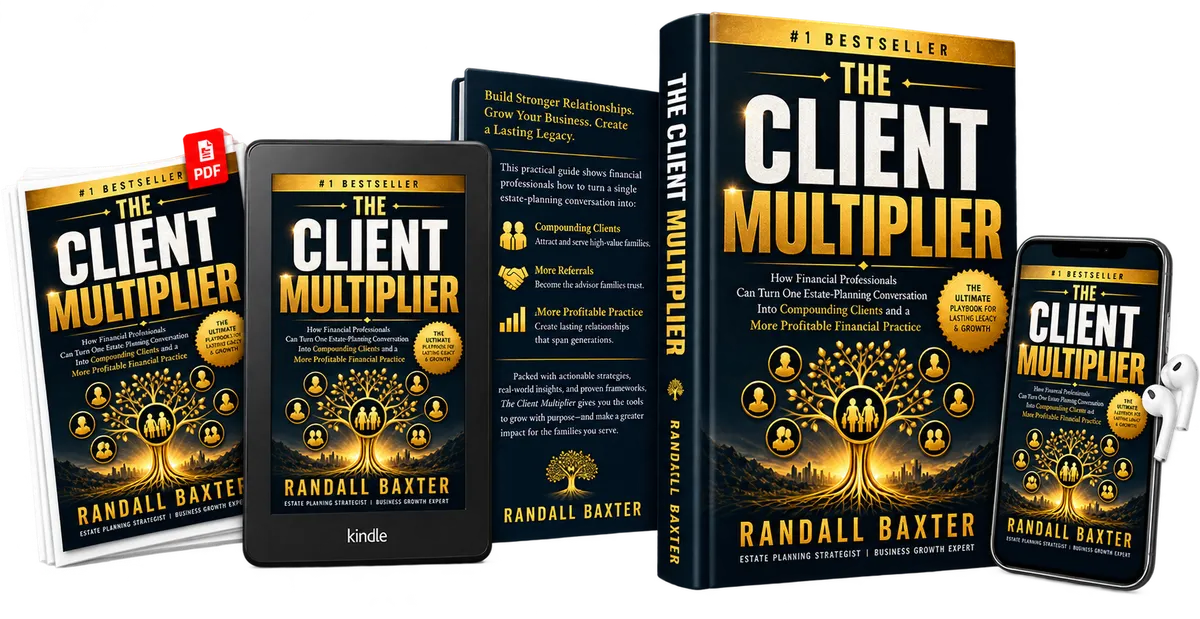
That Is the Purpose of The Family Tree Advantage.
The book is not built around the promise that every client will produce the same result.
It is built around something more credible and more useful:
Give Financial Professionals a Repeatable First-Interview Process for Discovering the Family Behind the Client.
That process can help create the conditions for deeper trust, better discovery, more purposeful reviews, appropriate follow-up, natural introductions, stronger multigenerational relationships, and a more valuable, profitable practice.
The Family Tree Advantage Was Written for You If…
You are an insurance or financial professional with an existing client base—but you know too many of those relationships have gone quiet.
You have been in financial services for five years or longer and feel you have reached a production plateau.
You are tired of buying leads that are expensive, unqualified, over-contacted, or difficult to convert.
You are tired of feeling that every month begins at zero.
You want to generate more business from relationships you have already earned.
You sell life insurance, annuities, retirement planning, investments, assets under management, long-term care, or related services.
You conduct annual reviews, but they lack a consistent structure.
You know you should ask for referrals, but you do not want the conversation to feel forced.
You want to be more consultative and less product-driven.
You want to identify estate-planning conversations without pretending to be an attorney.
You want a stronger relationship with clients’ spouses, children, grandchildren, trustees, and other trusted decision-makers.
You want to become more useful when a client experiences a relationship, health, or asset change.
You want a system you can teach to your team.
You want to move from being known for one product to being known as the professional who understands the family.
You Do Not Need to Abandon the Practice You Built.
You need a better way to use what you already have.
Your clients.
Your experience.
Your relationships.
Your professional network.
Your knowledge.
Your ability to ask questions.
The Family Tree First Interview organizes those assets into a process.
This Book Is Probably Not for You If…
You believe every client conversation should begin with a product presentation.
You are unwilling to listen before recommending.
You want a guaranteed shortcut that requires no practice or implementation.
You expect every interview to produce an immediate transaction.
You are not willing to stay within your professional licensing, compliance, and legal boundaries.
You are not willing to involve qualified attorneys, tax professionals, insurance professionals, investment professionals, or other specialists when the client requires them.
You are looking for exaggerated income promises rather than a professional relationship-development system.
This is a process for serious professionals who want to become more useful to their clients.
Here Is Just a Fraction of What You Will Learn in The Family Tree Advantage
Why many experienced professionals do not have a lead problem—they have a first-interview problem.
And how that misunderstanding keeps them chasing strangers while valuable relationships remain inactive.
How to escape the endless prospecting cycle without abandoning new-client acquisition.
The goal is not to stop marketing. It is to stop overlooking the people who already know, like, and trust you.
The critical difference between a product salesperson and a family’s go-to advisor.
And why clients may see those roles very differently.
How to draw the Family Tree—even if you are not artistic and have never used the process before.
It begins with one quarter-sized circle.
The questions that encourage clients to talk about spouses, children, grandchildren, dependents, beneficiaries, trustees, guardians, and future decision-makers.
Without turning the interview into an interrogation.
Why relationship changes, health changes, and asset changes should become the foundation of your annual-review process.
These three categories help you remain relevant as the family evolves.
How to recognize a planning conversation without prematurely recommending a product.
Diagnose before you prescribe.
How to use micro-commitments to move the conversation forward.
Without pressure, manipulation, or an artificial close.
How to determine whether a second appointment is appropriate.
And how to establish the next step while the need is clear.
How to structure the first meeting so both you and the client know what will be discussed.
A professional agenda creates clarity and control.
What to listen for when clients describe their family.
The answer behind the answer may be more important than the first response.
How to explore potential beneficiary and successor issues.
And recognize when further legal or professional review may be needed.
How to introduce estate-planning questions without pretending to provide legal advice.
Your role is to facilitate discovery and coordinate the right expertise.
How the Family Tree can reveal insurance, retirement, income, liquidity, long-term-care, asset-management, and other planning conversations.
When those conversations are genuinely relevant to the client.
Why one properly served client may introduce you to several other meaningful relationships.
Not through a forced referral script, but through earned trust and legitimate family needs.
How to conduct more purposeful annual reviews.
Instead of holding a generic “checking in” meeting with no clear reason or structure.
How to remain top of mind when something important changes.
So the client knows when and why to contact you.
How to create a 90-day plan for introducing the process to your existing client base.
With activity, appointments, follow-up, and accountability.
How to move from an isolated transaction to a relationship that may continue for years.
And, in the right circumstances, across generations.
This Is Not Another Book Telling You to “Work Harder” and Make More Calls.
You already know how to work.
You already know consistency matters.
You already know prospecting is part of the business. What may be missing is not motivation.
It may be a mechanism.
A specific process for turning an existing relationship into a meaningful planning conversation.
This is also not a book that tells you to memorize a high-pressure script.
Clients can feel the difference between a person who is listening and a person waiting to deliver the next line.
The Family Tree gives the conversation direction without making it robotic.
It is not legal training. It does not make you an attorney.
It does not authorize anyone to draft documents, provide legal advice, or operate outside their professional scope.
It teaches a discovery and relationship-development process.
It is not a promise that every interview will become a sale.
A client-centered conversation is valuable because it clarifies the situation—even when the appropriate next step is no immediate transaction.
And it is not a disguised 30-page brochure.
The redesigned book is being structured to teach the method first, supported by stories, frameworks, interview guidance, practical questions, worksheets, and a 90-day implementation path.
COMMON OBJECTIONS
“My Clients Already Have Attorneys.”
Good. The Family Tree process is not designed to replace qualified attorneys.
It can help you understand whether the client’s current planning still reflects the family’s wishes and circumstances. When legal review is appropriate, an attorney should be involved. The goal is coordination, not competition.
“I Am Not an Estate-Planning Specialist.”
You do not need to become an attorney to ask whether the client has a plan, whether it has been reviewed, who the relevant family members are, and what has changed. You must stay within your professional role. The process helps you identify questions and determine when other expertise is needed.
“I Do Not Want Clients to Think I Am Trying to Sell Them Something.”
That is one reason the process begins with the family rather than the product. The conversation is built around understanding. When a genuine need appears, you can discuss an appropriate next step. When one does not, you continue serving the relationship.
“My Practice Is Different.”
Every practice is different. But most clients still experience relationship, health, and asset changes. Those categories apply whether your primary work involves life insurance, annuities, retirement planning, investments, AUM, long-term care, employee benefits, property and casualty, tax planning, or another financial discipline. The application will vary. The family-centered principle remains.
“I Do Not Have Time to Learn a Complicated New Presentation.”
The core visual begins with a circle. The process requires practice, but it is intentionally designed to be understandable, teachable, and repeatable. Randy’s background as an educator influenced the method: make the conversation simple enough to understand and structured enough to use.
“Will This Work With Compliance?”
Every professional must follow the requirements of their firm, licenses, registrations, jurisdiction, and professional role. The book does not override those requirements. The method should be adapted and approved within the reader’s compliance environment.
One Relationship. Multiple Generations. Years of Continued Service.

INITIAL
CLIENT
INITIAL CLIENT
An 86-year-old man with an existing trust allows Randy to re8ew part of his current situation.
FAMILY DISCOVERY
The conversation reveals the spouse, daughter, granddaughter, successor trustee, and larger family structure.
RELATIONSHIP AND ASSET CHANGES
Deaths, inheritance, retirement, beneficiary questions, and changing responsibilities create new planning conversations.
NEXT GENERATION
The daughter and granddaughter become part of the relationship.
CONTINUITY
Approximately 15 years after the original client’s death, R18andy remains connected to members of the family and related decision-makers.
THE PRINCIPLE
THE PRINCIPLE
Understanding the family allowed Randy to remain useful as life changed.
This is one case study and is not representative of a guaranteed or typical result. Client details should be published only with appropriate permission, anonymization, and compliance approval.
See What Financial Professionals Are Saying

REVIEW HEADLINE
“VERIFIED REVIEW TEXT”
— NAME, ROLE, COMPANY
REVIEW HEADLINE
“VERIFIED REVIEW TEXT”
— NAME, ROLE, COMPANY
REVIEW HEADLINE
“VERIFIED REVIEW TEXT”
— NAME, ROLE, COMPANY
REVIEW HEADLINE
“VERIFIED REVIEW TEXT”
— NAME, ROLE, COMPANY
Here Is What You Receive When You Order Today
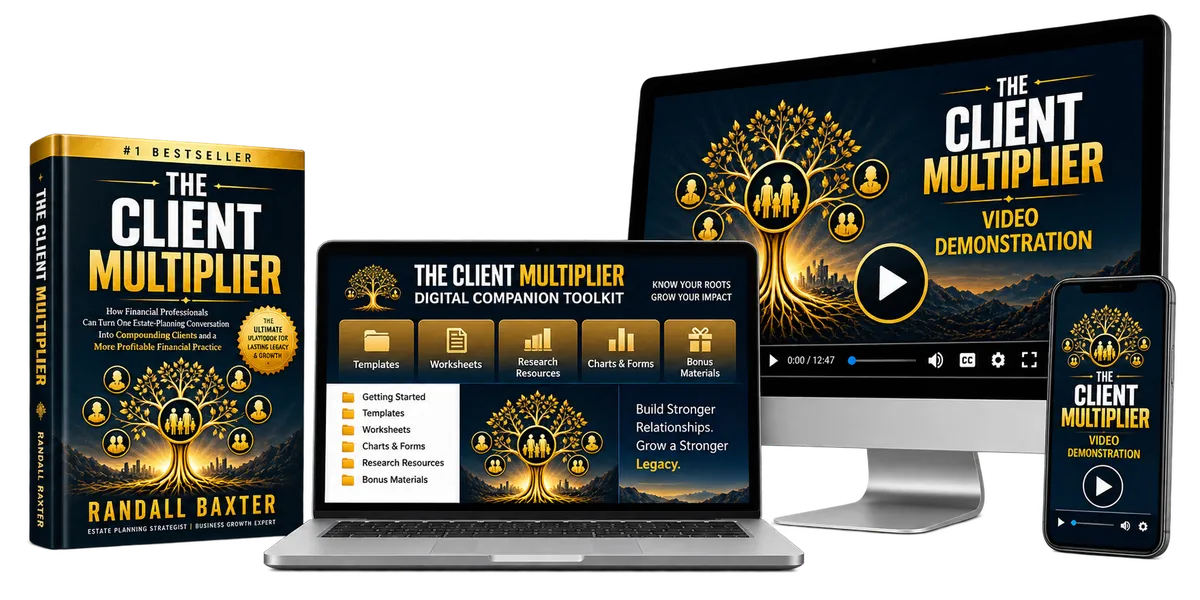
The Physical Copy of The Family Tree Advantage
How Financial Professionals Can Turn One Estate-Planning Conversation Into Multi-Generational Clients and a More Profitable Financial Practice
A professionally redesigned business book that explains the first-interview problem, the family tree mechanism, the relationship, health, and asset change framework, the first and second appointment, diagnose-before-you-prescribe principles, multigenerational relationship development, annual reviews, referrals and advocacyand a 90-day implementation plan.
The Family Tree Digital Companion Toolkit
These resources are designed to help you begin practicing the process rather than merely reading about it.
The Family Tree First Interview Agenda- a clear structure for preparing and guiding the meeting.
The 12 Questions Every Go-To Advisor Should Ask- questions for exploring relationships, responsibilities, decision-makers, concerns, and future planning needs.
The Relationship, Health, and Asset Change Checklist- a practical framework for annual reviews and client follow-up.
The Family Tree Practice Worksheet- a printable visual template for mapping the client’s family.
The First Interview Practice Scorecard- a self-assessment for reviewing your preparation, listening, transitions, and next-step process.
The 90-Day Implementation Tracker- a tool for tracking outreach, interviews, second appointments, follow-up, and implementation activity.
The Family Tree Video Demonstration
Watch Randy draw the Family Tree and explain how the interview develops. The method becomes easier to understand when you see the visual take shape in real time.
Total Today: $9.97
Physical book · Digital toolkit · Video demonstration — all included
Why Put So Much of the Process Into an Introductory Book?
Reason One: Randy Is Still a Teacher
Before financial services, Randy taught students.
Throughout his financial-services career, he trained agents and helped professionals understand ideas that initially seemed difficult.
This book allows him to organize what he learned into a process that can help more people than he could reach individually.
It is the resource he wishes he had when he was learning how to move beyond product-first selling.
Reason Two: The Best Way to Demonstrate the Process Is to Teach It.
Randy could tell you the Family Tree method is useful.
But it is more convincing to let you see it.
Read the story.
Study the framework.
Draw the circle.
Use the questions.
Watch the demonstration.
Then decide whether the approach deserves a place in your practice.
Some readers may later decide they want implementation training, tools, software, coaching, or additional support.
Others may simply use the ideas in the book.
There is no obligation to enroll in anything else.
The purpose of the front-end offer is to begin the relationship by delivering something useful.
Try the Book Without Carrying All the Risk.

Order The Family Tree Advantage and review the material for 30 days after delivery.
If you do not believe the book gave you a clearer way to structure a client-centered first interview, contact us within the guarantee period.
We will refund the purchase price of the book according to the terms shown at checkout.
APPROVED RETURN OR KEEP-THE-BOOK TERMS
Order During the Introductory Release and Receive These Additional Resource
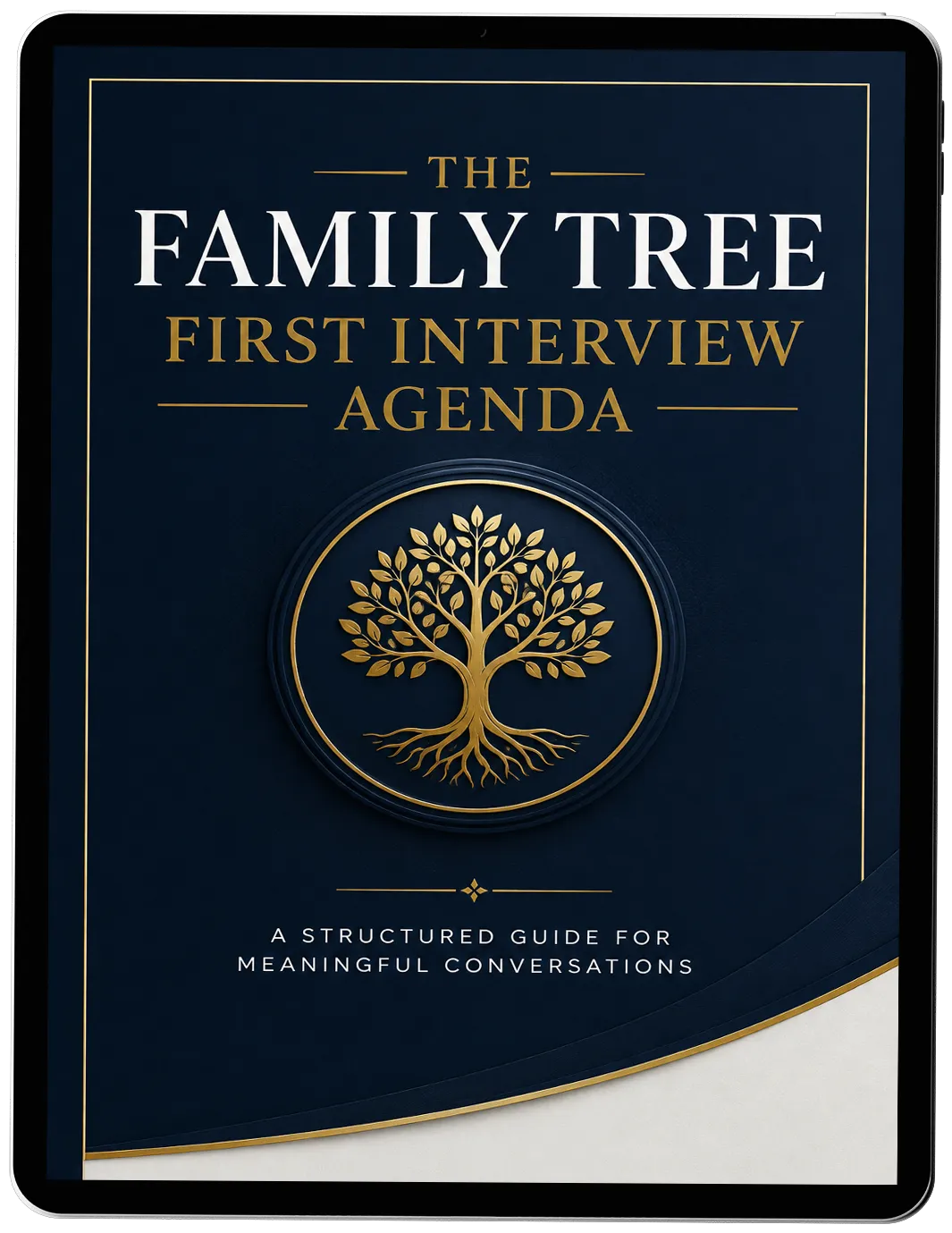
INCLUDED RESOURCE #1
The Family Tree First Interview Agenda
Know how to open the meeting, explain the purpose, transition between topics, and establish the next appropriate step.
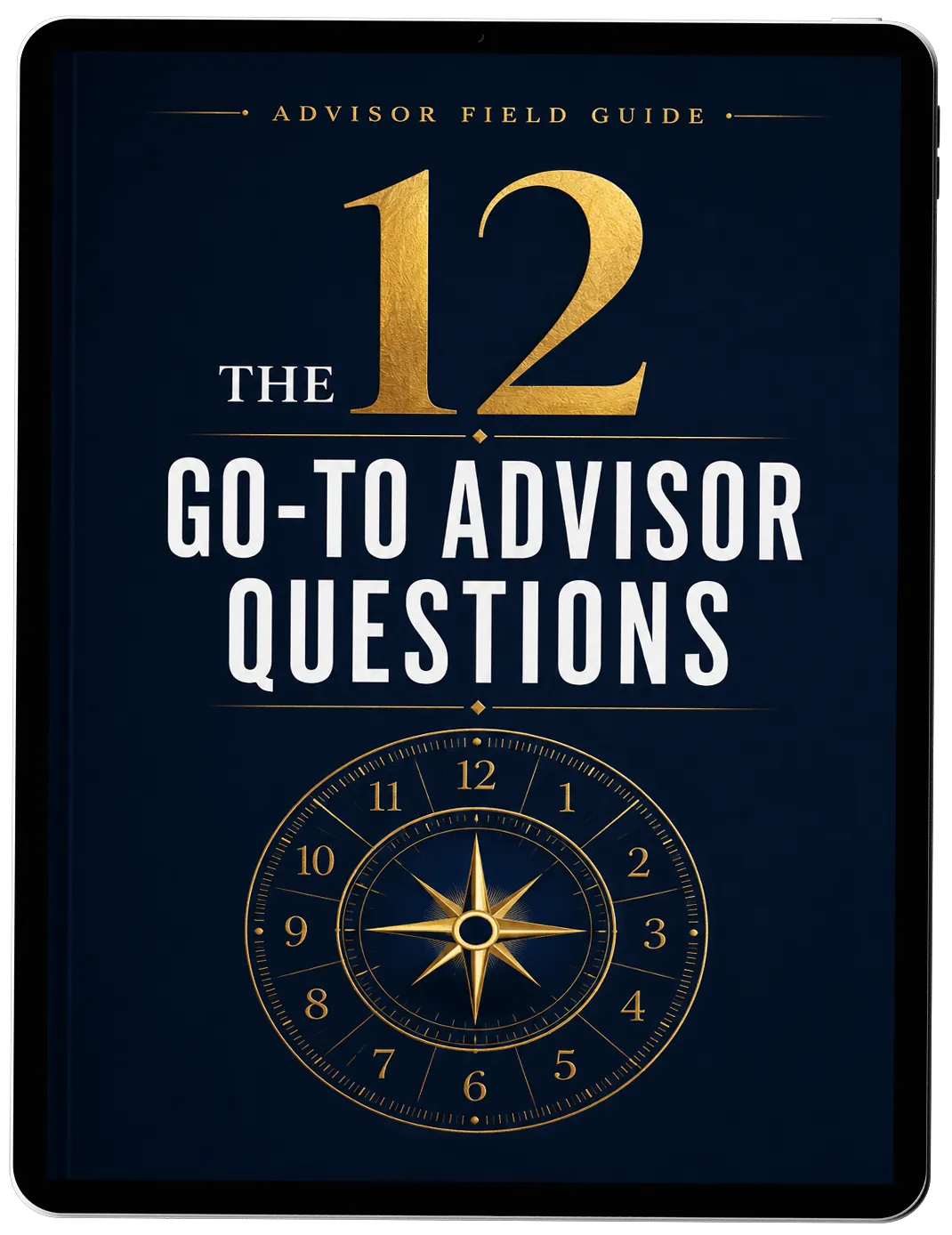
INCLUDED RESOURCE #2
The 12 Go-To Advisor Questions
Use these prompts to explore the family, decision-makers, responsibilities, existing plans, and potential areas for further review.
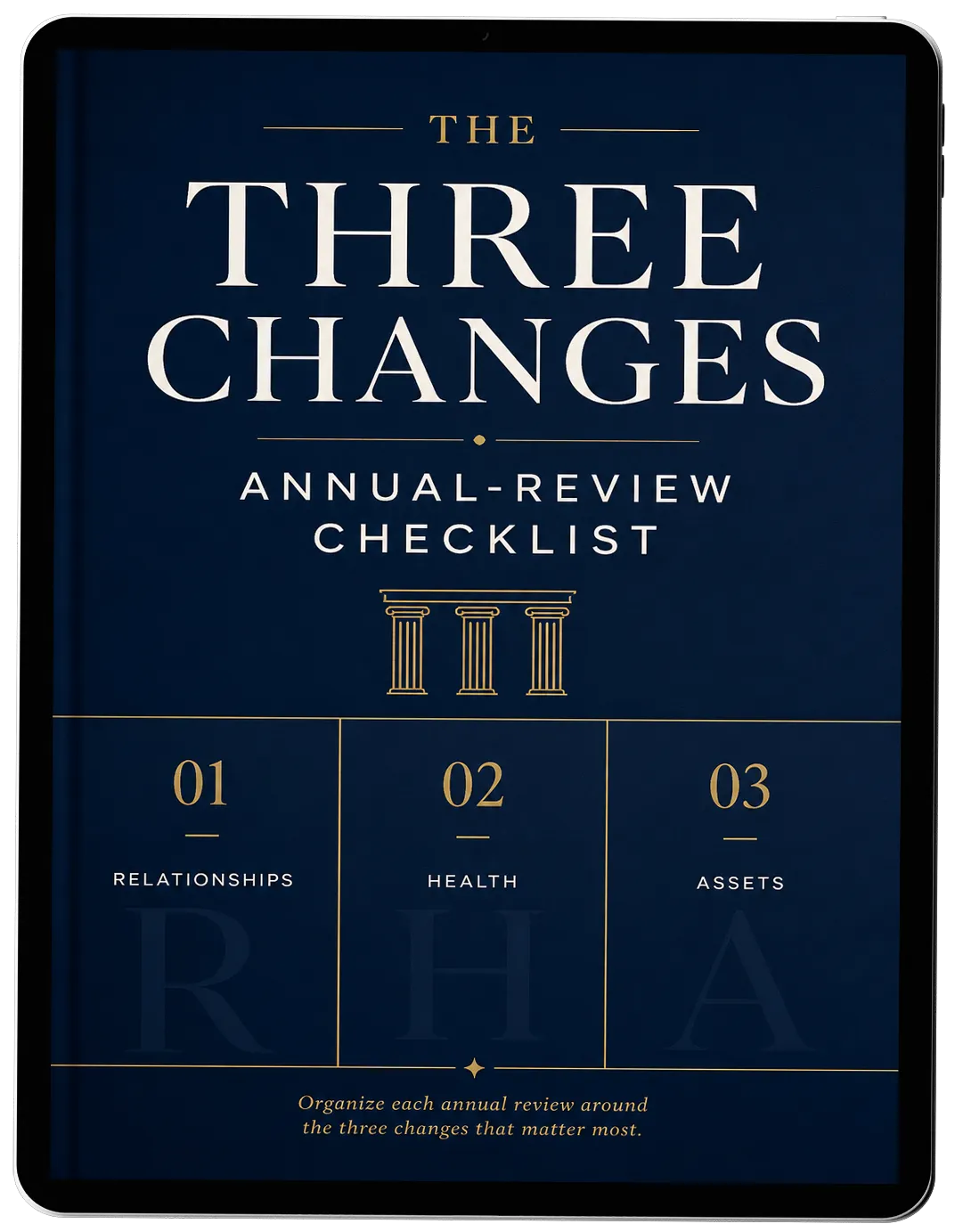
INCLUDED RESOURCE #3
The Three Changes Annual-Review Checklist
Organize each annual review around, relationship changes, health changes and asset changes.
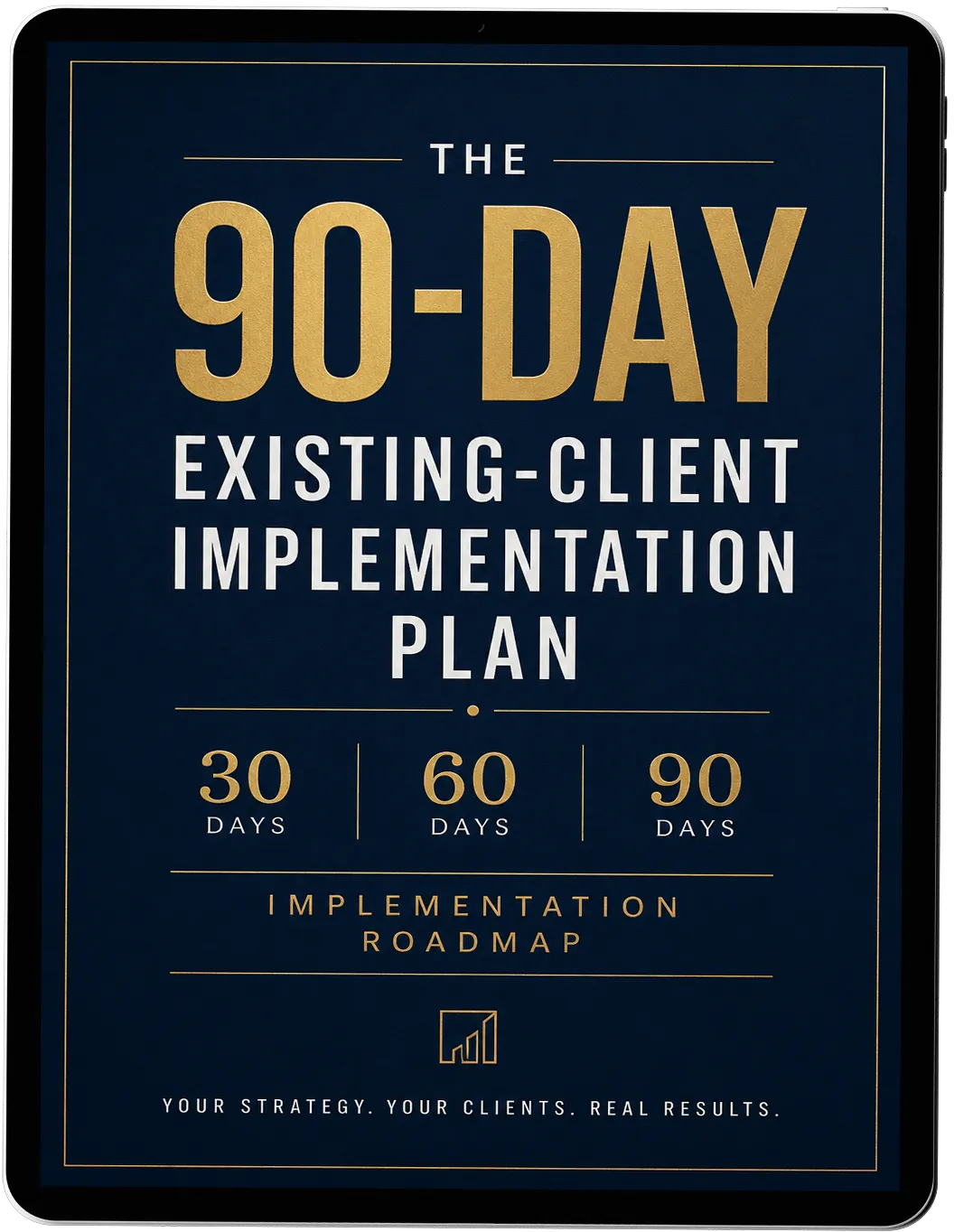
INCLUDED RESOURCE #4
The 90-Day Existing-Client Implementation Plan
A simple plan for identifying clients, initiating outreach, scheduling interviews, practicing the method, and tracking follow-up.
INCLUDED RESOURCE #5
The Family Tree Video Demonstration
See the visual interview process in action.
This Introductory Offer Will Not Remain Open Indefinitely.
The physical book requires printing, inventory, packing, and fulfillment.
The number of copies available during each release period is limited by the quantity actually printed and ready to ship.
“Copies available from the first printing: QUANTITY”
Your Next Meaningful Client Relationship May Already Be in Your Book of Business.
You may not need to begin with another stranger.
You may not need another list.
You may not need another complicated script.
You may need a better reason to speak with the people who already know you.
A better structure for the meeting.
A better way to understand the family.
A better way to recognize change.
A better way to remain useful after the original transaction.
The Family Tree First Interview gives you a place to begin.
One circle.
One client.
One spouse.
Children.
Grandchildren.
Responsibilities.
Decision-makers.
Relationship changes.
Health changes.
Asset changes.
Then the appropriate next conversation.
You Cannot Control Every Outcome.
But you can control the quality of the questions you ask.
You can control whether you listen.
You can control whether the meeting begins with the family or the product.
You can control whether the client sees you as someone who completed a transaction—or someone who understands the bigger picture.
Get The Family Tree Advantage and learn the interview process designed to help financial professionals build deeper, longer, and more valuable relationships.
Complete Your Order
Your Order Includes
The Family Tree Advantage
Family Tree Digital Companion Toolkit
Family Tree Video Demonstration
Total Value : $9.97
Frequently Asked Questions
Who is this book for?
The primary reader is an experienced insurance or financial professional with an existing client base who wants a more structured way to reopen relationships, improve discovery conversations, conduct meaningful annual reviews, and build multigenerational connections.
Is this only for estate-planning professionals?
No.
Estate planning creates the opening conversation, but the broader method concerns family discovery, relationship development, changing responsibilities, and identifying the next appropriate planning discussion.
Readers must remain within their licenses, registrations, professional qualifications, firm policies, and applicable laws.
Do I need to be an attorney?
No.
The book does not train readers to practice law or provide legal advice.
Financial professionals should involve qualified attorneys and other specialists whenever a client’s situation requires legal, tax, investment, insurance, or other professional expertise.
Will this help me sell more products?
The process may help you identify legitimate needs and appropriate conversations.
However, no sale, client, referral, commission, revenue, or income result is promised.
The method is designed to improve discovery and relationship development—not force every meeting into a transaction.
Does the system require special software?
No software is required to understand or begin practicing the core interview method taught in the book.
Additional implementation tools, software, coaching, or training may be available separately.
Is this appropriate for newer professionals?
Newer professionals can benefit from learning a structured interview process.
The strongest immediate fit is an established professional who already has clients and wants to make better use of those relationships.
What exactly will I receive?
You will receive:
Digital access to the companion toolkit
Digital access to the video demonstration
Is there a subscription?
No recurring subscription is included in the book order unless one is clearly presented separately and affirmatively selected.
What is the refund policy?
How quickly will the book arrive?
Digital resources will be delivered according to the instructions provided after checkout.
Can my agency purchase copies for a team?
Team, agency, and organizational options may be available.
Contact [email protected] for information.
P.S.
You may have spent years building a client base without ever being shown a structured way to explore the family behind each client.
That is the opportunity this book addresses.
The Family Tree process begins with one sheet of paper and one better conversation.
It helps you see the spouse, children, grandchildren, beneficiaries, trustees, dependents, responsibilities, and future decisions surrounding the client.
That information can change the way you conduct the meeting—and the way the client sees your role.
Get the physical book and companion resources today.
P.P.S.
The most expensive lead may be the client relationship you already paid to acquire—but failed to develop.
You invested years earning trust.
Do not allow that trust to remain attached to only one product or one transaction.
Learn how to reopen the relationship with a professional, client-centered conversation.
P.P.P.S.
This is not a promise that one interview automatically creates 15 years of business or three generations of clients.
It is proof that one relationship can become far more valuable when you understand the family, remain useful through change, and earn the right to stay involved.
That is the advantage.
The Family Tree Advantage. All related materials are provided for general educational and professional-development purposes only.
The materials do not constitute legal, tax, investment, securities, accounting, insurance, compliance, or other individualized professional advice.
Nothing in the materials authorizes any person to provide services outside the scope of that person’s licenses, registrations, qualifications, firm policies, contractual obligations, jurisdiction, or applicable law. Financial professionals should involve appropriately qualified attorneys, tax professionals, insurance professionals, investment professionals, and other specialists when appropriate. Examples and case studies are presented for educational purposes. They should not be interpreted as promises, guarantees, or representations of typical future results.
Individual circumstances and business outcomes will vary. No particular client, referral, sale, commission, revenue, profitability, asset, or income result is promised or guaranteed. All public claims, testimonials, endorsements, case studies, professional credentials, pricing, guarantees, inventory statements, and deadlines are subject to documentation, permission, legal review, and applicable compliance approval.